
Showing posts with label Roofing Contractors. Show all posts
Regarding the protection of your home from the elements, there's no one more crucial than roofing contractors. These unsung heroes of the construction world play a vital role in ensuring that your house remains a safe and comfortable haven. In this article, we will dive into the world of roofing contractors, probing what they do, the services they provide, and the paramount importance of finding reputable local roofing contractors. Additionally, we will delve into the various types of roofing ma

Roofing Contractor

Trusted Veterans Restoration LLC

7039536800

351 Windwood Ln, Paris, VA, 20130

https://sites.google.com/view/viva-casa-network/roofing-contractors
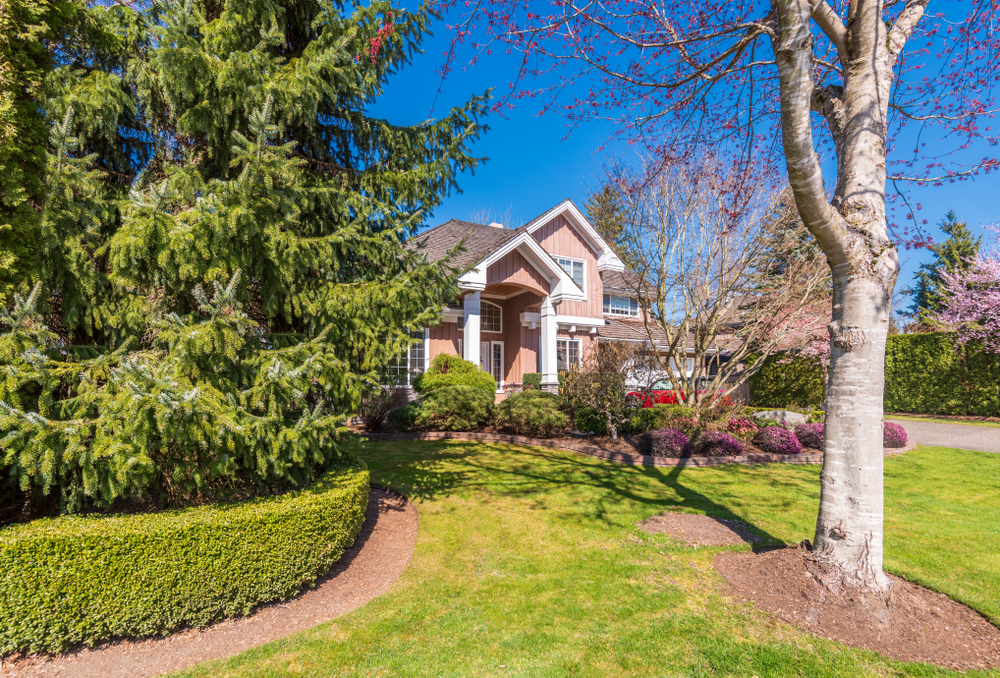
Roofing Contractor

Regarding the protection of your home from the elements, there's no one more crucial than roofing contractors. These unsung heroes of the construction world play a vital role in ensuring that your house remains a safe and comfortable haven. In this article, we will dive into the world of roofing contractors, exploring what they do, the services they provide, and the paramount importance of finding reputable local roofing contractors. Additionally, we will delve into the various types of roofing materials, providing you with a comprehensive understanding as if we're chatting over a cup of coffee.

Imagine your home as a fortress, and the roof as its impenetrable shield. Roofing contractors are the skilled artisans who shape and maintain this shield. Their primary task revolves around the installation, repair, and maintenance of roofs, ensuring that they stand strong against precipitation, gusts, snow, and the blazing sun.

Roofing contractors offer a wide array of services, tailored to the unique needs of each homeowner. They provide roof installation, repair, maintenance, and replacement services, ensuring your home is protected all year round.

Now, let's talk about one of the most critical aspects of roofing – finding reputable local roofing contractors. Imagine choosing an inexperienced contractor to construct your shield; the consequences could be catastrophic. Reputable local roofing contractors offer several benefits:

Trustworthiness: Local contractors have a track record to uphold in the neighborhood. You can trust them to deliver quality work, as their business relies on satisfied customers. Familiarity with Local Conditions: Local contractors understand the unique climatic factors and challenges in your area. This knowledge ensures that your roof is built to withstand local weather patterns. Swift Response: In case of emergencies or urgent repairs, local contractors can deliver a swift response, preventing further damage to your home.

Their expertise includes extensive knowledge of roofing materials and can aid in selecting the most suitable ones for your roofing job. Furthermore, they make use of cutting-edge equipment and tools to ensure accuracy in their work.

Alongside installation and repairs, they provide roof maintenance services that extend the lifespan of your roof, saving you funds in the long run. Choosing a professional roofing contractor provides peace of mind, aware that your roof is well taken care of. Their meticulousness guarantees that every roofing project they undertake is completed to a high standard.

Additionally, reputable local contractors offer competitive pricing, ensuring you receive value for your money. They are properly licensed and insured, offering additional assurance in case of unforeseen circumstances. In the end choosing a trustworthy local roofing contractor is a commitment to the safety and security of your home.

<2>Types of Roofing Materials Now, let's explore the world of roofing materials, offering you options for your home's shield:

Shingle Roofs: Shingle roofs are the most common choice for residential buildings. They are cost-effective, easy to install, and come in a variety of styles and colors.

Metal Roofs: If durability is your primary concern, metal roofs are an excellent choice. They can stand the test of time and are highly resistant to harsh weather conditions.

Tile Roofs: Tile roofs are known for their elegance and longevity. They come in various materials, including clay, concrete, and slate. Wooden Shakes: Wooden shake roofs exude a rustic charm and natural beauty. They are eco-friendly and can last for several decades with proper maintenance.

Flat Roofs: Flat roofs are common in commercial buildings. They are reasonably priced and provide additional space for HVAC systems or rooftop gardens. Slate Roofs: Slate roofs are synonymous with luxury and elegance. They have a ageless fascination and can last over a century.

In conclusion, roofing contractors are the guarder of your home's shelter, ensuring that you have a resilient barricade against nature's forces. Finding reputable local roofing contractors is vital to guaranteeing the lasting power and reliability of your roof. And when it comes to choosing the right roofing material, it's like selecting the perfect armor for your home – a decision that should be made with careful consideration of your needs and preferences. So, whether it's the classic shingle roof, the robust metal roof, or any other roofing material, rest assured that the right roofing contractor will help you make the best choice for your residence.

Roofing Contractor

Trusted Veterans Restoration LLC

7039536800

351 Windwood Ln, Paris, VA, 20130

https://sites.google.com/view/viva-casa-network/roofing-contractors

Read More
Housing Market Outlook: Top Forecaster Says Home Prices to Climb 7%Menu iconSearch iconBusiness Insider logoBusiness Insider logoAccount iconAccount iconClose iconChevron iconAccount iconShare iconFacebook IconEmail iconTwitter iconLinkedIn iconLink iconSave Article IconAngle down iconClose icon

Housing Market Outlook: Top Forecaster Says Home Prices to Climb 7%Menu iconSearch iconBusiness Insider logoBusiness Insider logoAccount iconAccount iconClose iconChevron iconAccount iconShare iconFacebook IconEmail iconTwitter iconLinkedIn iconLink iconSave Article IconAngle down iconClose icon

Nik Shah, the chief executive of Home.LLC, nailed his housing market forecast last year, accurately predicting in November 2022 that home prices would climb even as other real estate experts said they were set to drop. 

In 2024, he expects home prices to climb between 4% and 7%, according to an interview with ResiClub.

"Barring a black swan event, we predict that the housing market in 2024 will appreciate more than 2023," Shah told the real estate outlet. 

For reference, the S&P CoreLogic Case-Shiller National Home Price Index notched a 4.8% annual gain up to October 2023, in line with Shah's estimate. 

He forecasts the Case-Shiller home price index to climb again in 2024 as falling mortgage rates bring buyers back to the market, and as demand outpaces tight supply.

AI models used by Shah's firm project a 5 million increase in homebuyers for every 1% drop in rates. To that point, he said there are fewer than 1.5 million homes listed for sale.

"For resales, our AI projects that decreasing rates will increase demand way more than increasing supply," the executive said. "Plus, there's a 11% annual drop in construction of single-family homes. Plus, increasing unemployment won't materially increase delinquencies because the credit quality and home equity of most borrowers is pristine."

He added that even as the national home price index appreciates, the company remains bearish on metros including Austin, Boise, and Denver, a view that hasn't changed since 2022.

Home.LLC ultimately remains bearish in the long-term, Shah told ResiClub, given declining birth rates and affordability challenges waiting for Gen Z. At the same time, aging boomers will lead to an uptick in housing supply, which will should help ease prices. 

Meanwhile, findings from a separate Zillow survey suggest that the housing market could be breaking free from the "rate lock" phenomenon that froze activity last year.

Owners now appear less deterred by high rates when weighing whether to sell their homes, with 21% of survey respondents reporting they are considering listing their house for sale in the next three years. 

Read next

Watch: One in every 10 Americans moved during the pandemic. Here's where they went.

Jump to

Read More
Houston Has the Solution for Building Cheap New Starter HomesMenu iconSearch iconBusiness Insider logoBusiness Insider logoAccount iconAccount iconClose iconChevron iconAccount iconShare iconFacebook IconEmail iconTwitter iconLinkedIn iconLink iconSave Article IconAngle down iconClose icon

Houston Has the Solution for Building Cheap New Starter HomesMenu iconSearch iconBusiness Insider logoBusiness Insider logoAccount iconAccount iconClose iconChevron iconAccount iconShare iconFacebook IconEmail iconTwitter iconLinkedIn iconLink iconSave Article IconAngle down iconClose icon

Houston, Texas is known for its Space Center and bayous — and, more recently, its abundant starter homes. Houston's newer townhomes built in the last couple of decades join the brownstones of New York City, the rowhouses of DC, and the Victorians of San Francisco as a form of relatively dense housing.

But unlike its coastal counterparts, Houston's homes are much cheaper and more abundant. The city is building lots of what most of the country desperately needs: affordable housing.

Key to this is Houston's approach to an influential, but little-known land-use policy: minimum lot sizes. Since the early to mid-20th century, virtually all American cities have imposed rules that require single-family homes to sit on at least 5,000 to 10,000 square feet of land.

In rural areas with limited water and sewer infrastructure, low-density living makes sense as a health and practical matter. But in urban areas, requiring large lots only makes neighborhoods more exclusive and expensive.

"It's really a way to limit housing construction," said Emily Hamilton, a housing researcher at the Mercatus Center at George Mason University. She added that minimum lot sizes maintain "a homogenous type of housing construction with often a high floor on how expensive it has to be."

Restricting construction encourages sprawl, which makes walking anywhere difficult and driving necessary. Minimum lot sizes make homes an average of about $30,000 more expensive than those in similar, less regulated areas, and reduce density by 11%, housing researchers Joseph Gyourko and Sean McCulloch found last year.

With urban housing in demand in the 1990s, city leaders decided to do something about it. In 1998, Houston shrunk its single-family lot size requirement from 5,000 square feet to 1,400 square feet in most of the city. In 2013, the city expanded that policy to all land that receives its wastewater collection services.

The effects have been dramatic. The policy change has spurred the construction of almost 80,000 new homes, many of them townhouses and other kinds of small-lot single-family homes.

And unlike some other upzoning measures, Houston's 2013 reforms didn't push land values up, Hamilton found in a study published earlier this month. She and other researchers believe this is because the land-use change applies to such a large geographic area. When development capacity increases on so many lots and spurs lots of new construction across the city, the expected income from any one piece of land is diminished.

Hamilton said her findings were "somewhat surprising," because some other upzoning efforts have been shown to increase land values, counteracting some of the affordability benefits of allowing for more housing. But what sets Houston apart is that the policy change spurred lots of new construction.

"It's probably the most radical land-use reform adopted by any US city over the last 30 years, and it's certainly the most successful by unit count," said Nolan Gray, a city planner and research director for California YIMBY who's done research on Houston's policy.

A 'free lunch opportunity'

Shrinking or eliminating minimum lot sizes may be radical, but it's the kind of market-based approach that pro-housing advocates across the political spectrum support. Many conservatives are joining progressives in pushing to get rid of many regulations that limit housing density.

Houston's lot size reform would make sense all over the country. While some Americans still want picket fences and far-flung subdivisions, dense and walkable neighborhoods are more desirable these days. An analysis published last year found that homebuyers in the 35 biggest American metropolitan areas paid 34% more to live in walkable neighborhoods, while renters paid 41% more. Minimum lot sizes — on top of other restrictive land-use policies like single-family zoning — make these walkable communities illegal to build.

"We're essentially mandating the most environmentally unfriendly pattern of living and in a context where many millions of Americans, if prices are any indication, want to live a different way," Gray said.

Houston's reform has also limited gentrification and, instead, encouraged new construction in higher-income neighborhoods, which are exactly the kinds of places that tend to welcome the fewest new residents in most cities. And the more affordable homes that come online, the more possible it is for Black, brown, and other marginalized communities to own homes and shrink the racial wealth gap.

Because Houston has very few zoning laws in place at all, homes can be built on property that used to house commercial or industrial buildings. "Those new townhouses outside of I-610 are often replacing dead strip malls or self-storage or other relatively low-value commercial uses, rather than single-family houses," Hamilton said.

Gray thinks Houston's success with smaller lot sizes has to do with the city's "pro-growth culture." That culture of deregulation also has downsides. The city has paved over many of its critical wetlands, and built far too much parking. Residents disenchanted with townhome density have created sprawling exurbs.

But the massive success of Houston's minimum lot size reform is getting noticed across Texas and around the country. Last summer, the city council of Austin, Texas, passed a measure to cut its minimum lot size for a single-family home from 5,750 square feet to 2,500 square feet. Auburn, Maine, and Helena, Montana, both got rid of minimum lot sizes in some parts of their cities, and a slew of state legislatures, including Arizona, Massachusetts, and New York, are considering smaller lot requirements, Mercatus researcher Salim Furth found.

"Houston kind of has revealed a potential free lunch opportunity for cities that are struggling with getting more affordable homeownership opportunities built," Gray said. "If you're a policymaker in a city that's not having enough homeownership opportunities come online, like, hello, this costs you nothing."

Read next

Watch: This Texas Millionaire Lives In A Low-Income Housing Complex In Houston

Jump to

Read More
Housing Development Plan in Berkeley Brought Harrassment, Threats to 27-Year-Old CouncilmanMenu iconSearch iconBusiness Insider logoBusiness Insider logoAccount iconAccount iconClose iconChevron iconAccount iconShare iconFacebook IconEmail iconTwitter iconLinkedIn iconLink iconSave Article IconAngle down iconClose icon

Housing Development Plan in Berkeley Brought Harrassment, Threats to 27-Year-Old CouncilmanMenu iconSearch iconBusiness Insider logoBusiness Insider logoAccount iconAccount iconClose iconChevron iconAccount iconShare iconFacebook IconEmail iconTwitter iconLinkedIn iconLink iconSave Article IconAngle down iconClose icon

When Rigel Robinson was elected to the Berkeley City Council in 2018 — just months after graduating from UC Berkeley — he was determined to tackle the city's housing crisis as its youngest-ever council member.

Little did he know that six years later, at 27 years old, he would be handing in his resignation notice.

As an undergrad serving on Berkeley's student government, Robinson grew passionate about building more affordable student housing in the notoriously expensive city. After being elected, he built on those efforts to shape the city government as the Chair of the Land Use, Housing, and Economic Development committee.

At the forefront of the housing debate that has long roiled Berkeley is whether to move forward with the university's plans to build 1,100 units of student housing and 125 units of supportive housing for homeless residents in a green space known as People's Park.

The park was the site of anti-war protests and other progressive activism in the 1960s and has long been a gathering place for the community and a homeless encampment. Meanwhile, the university is facing a severe student housing shortage amid a broader affordability crisis.

The issue has divided the progressive community, pitting pro-housing YIMBYs — which stands for "Yes In My Backyard" — against so-called "left NIMBYs," who oppose new development on the grounds that it hurts lower-income and marginalized people. In response, advocates for new housing development point to numerous studies have found that even the addition of market-rate housing helps bring down costs in a community and lowers the risk of displacement.

Decades of debate over the future of the park has culminated in a slew of lawsuits from local opponents. Last year, Gov. Gavin Newsom signed a bill allowing Berkeley and other universities to overcome community objections to potential noise issues from student residents. The university — which has barricaded the park while construction is on hold — won't have final go-ahead until the state supreme court weighs in.

Robinson and many other progressives believe the university's development plan would do much more to help students and vulnerable community members than keeping People's Park as a green space. And, he argued, it would better reflect the park's history.

"It's an incredibly elegant and really balanced proposal," he said, noting that most of the park would be kept as green space. "I believe that we really could better honor that history by repurposing the site."

But Robinson's advocacy for housing in People's Park was met with a wave of harassment from residents who wanted to keep the park as is. He reached his breaking point in early January when he decided to resign from the council.

"We knew that when the park was closed, it would be an intense and fraught moment for our community," Robinson told Business Insider. "But when people employ tactics like harassment and stalking and threats to try to subvert the will of the people and the votes and directions that our democratically elected city council has made, I think that creates a problem."

While it's increasingly common for public officials to face harassment and intimidation, Robinson said it was "most acute" for him when it came to People's Park.

The intensity of the pushback forced him to evaluate whether he could tolerate the opposition, or take a step back and preserve his mental health. He chose the latter, and while he doesn't regret his decision, he hopes that those opposed to building housing won't get in the way of the needs of the community.

"I ran for this office to elevate the voice of the next generation, and the most pressing challenge facing young people and working families in our city is the housing crisis," he said. "But Berkeley is a city notorious for its resistance to new growth. The NIMBY capital of the West Coast, if you will."

'Relentless efforts' to stunt housing projects

When Robinson was running for the council in 2018, some of his political mentors advised him to stay away from YIMBYs because an association with them would make it harder to get endorsements from progressive groups who view YIMBYs as "developer shills."

While that might have been the case at the time, Robinson said, he didn't take that advice — and now, "the politics of the issue have entirely changed."

"Even the candidates who are the most averse to and skeptical of new housing construction, they don't want to sound like NIMBYs," Robinson said. "And that is a titanic shift."

But that shift in the mindset of some politicians hasn't been enough to quell the pushback from Berkeley residents who don't want to see more housing units in their neighborhoods. Earlier this month, the conflict escalated as hundreds of police officers arrested dozens of protesters and cleared tents at People's Park.

"With the People's Park project, there have been relentless efforts, both in terms of protests and activism, and legal tools, to obstruct the project every step of the way," Robinson said.

Since Robinson resigned, some of his fellow council members spoke out on the harassment he endured, and the importance that abusing policymakers should not become the norm — even on controversial issues like housing.

"CM Robinson, thank you for your service to the City of Berkeley, the kindness with which you led, & your tireless advocacy for safe streets, affordable housing, & community safety," one council member Terry Taplin wrote on X, formerly Twitter, on January 9. "The harassment & abuse public servants face is real," he wrote. "This toxicity should never be normalized."

Robinson said that while he'll miss fighting for the issues he's passionate about on the council, he's happy that he's able to prioritize his mental health and his family as he figures out what's next. And when it comes to Berkeley's future, he's feeling pretty optimistic about that, as well.

"It is our job to be responsive to the community, but sometimes the right thing to do requires you to listen and then hold your ground and make the right choice in the face of a whole lot of noise and frustration," Robinson said.

"And I think that's what we've seen with this project at People's Park, which is not only going to represent a new chapter for that site, and for the story of People's Park and for the story of resistance to state violence, but really is going to provide incredible resources and meet urgent needs in the city," he continued. "There's no more precious resource in Berkeley than permanent supportive housing."

Read next

Watch: REAL ESTATE WARS: Inside the class and culture fight that's tearing San Francisco apart

Jump to

Read More
5 Housing Trends to Watch in 2024 - ReadWrite

5 Housing Trends to Watch in 2024 - ReadWrite

Now that 2024 has arrived, many are hoping for a better housing market. Last year saw record-low home sales, one of the worst housing shortages in recent history, and the highest mortgage rates in over twenty years. 

Will this year be any different? And what will it mean for institutional real estate investors? 

Since 2010, the U.S. has had a major housing shortage, which means there have been more buyers than homes for sale. According to a recent estimate, the U.S. must supply around 3.2 million more homes to meet demand. 

Part of the problem is a construction lag. After the 2008 housing crash, many builders built homes at a slower pace to avoid getting stuck with inventory they couldn’t sell (which happened to many leading up to the crash). Plus, recent supply and labor shortages and higher interest rates have made building more expensive. 

The resale market isn’t much better. Last October, existing U.S. homes for sale fell to a 13-year low of 3.79 million. A lot of this had to do with mortgage rates topping 8% for the first time since 2000, pricing many out of the market. But it’s also the result of many homeowners refusing to sell and give up their fixed low-rate mortgages, further constraining housing supply, aka the “lock-in effect.”

Of course, this could change as major life events force more homeowners to sell (e.g. a growing family or a new job requiring owners to move) and if mortgage rates fall …

For about 15 years, homebuyers enjoyed average 30-year fixed mortgage rates of below 5%. But that all changed in 2022 when mortgage rates skyrocketed. 

Why? The Federal Reserve started hiking its key interest rate (which serves as the benchmark for all other interest rates, including mortgage rates) in March 2022 to ease rampant inflation (a result of near-zero interest rates during the COVID-19 pandemic). 

However, now that inflation has fallen near the Fed’s target 2% rate, the central bank hasn’t raised interest rates since July, potentially achieving a “soft landing,” i.e. reducing inflation without causing a recession. 

Since their recent October peak, mortgage rates have been coming down. As of 4 January 2024, the average 30-year fixed rate is 6.62%. 

Though it’s impossible to predict where mortgage rates go from here, there’s good reason to believe they could fall. For one, the bond yield curve, which shows the yields of different treasury bonds at various maturity dates (1 month to 30 years) is inverted. This means yields are higher for short-term bonds than for long-term bonds, indicating investors expect interest rates to fall.  

Furthermore, recent surveys show that consumers expect mortgage rates to fall, too.

The consensus among experts is that mortgage rates will decline gradually across 2024, landing somewhere between 6.1% and 6.6% by the end of the year. Most aren’t expecting mortgage rates to go up. If anything, they’ll stabilize, which will at least inject further confidence in homebuyers about where interest rates will be over the next year.

Of course, anything could happen. 

Assuming mortgage rates fall, housing sales could pick up. For one, it would make homes more affordable, bringing more buyers to the market. But it would also help free up existing homes held captive by the lock-in effect, i.e. more homeowners would be willing to sell if they can buy their next house at a lower mortgage rate.

All of this could heat up the housing market.

It’s no secret that many millennials are trying to buy homes. They’re America’s largest generation and entering their prime homebuying years (25 to 45 years old). 

However, compared to previous generations, many millennials are becoming homeowners at later ages or not at all—partly due to the challenging housing market of the last few years. 

Still, the American dream of owning a house is alive and well. According to a recent survey, nearly three-quarters of Americans place owning a home above career, family, and college as a sign of prosperity. 

This means that despite the challenging market and competition from baby boomers competing for the same homes with more cash, many millennials are pushing forward in their goal to buy a home. Those who haven’t yet succeeded only add to the pent-up demand for houses, especially smaller, starter homes.

Low supply and pent-up demand will likely keep home prices high for the foreseeable future. As of Q4 2023, the median home sales price was $431,000. 

This puts a strain on first-time homebuyers, especially considering the added cost of higher mortgage rates. In fact, home affordability is the worst it’s been since 1984.

The household income required for the median $431,000 home at the current average 30-year fixed rate of 6.62% is nearly $100,000 (assuming the borrower spends only a third of their monthly income on their monthly mortgage payment). 

However, wages haven’t kept up with home prices. According to the Federal Finance Housing Agency, home prices rose 74% from 2010 to 2022, while the average wage rose only 54% during the same period.

To make matters worse, home insurance costs in many coastal markets (e.g. in California and Florida) have gone up. 

Bottom line: High home prices and home affordability will still be major challenges in 2024. 

That said, every housing market contains investment opportunities. And things are looking up for many investors and consumers.

According to a recent New Western study, 53% of residential real estate investors expect business growth in 2024, and 55% of consumers feel that local investors can help solve the housing shortage.

Here are a few examples of potential silver linings in this year’s housing market:

As a real estate investor in 2024, now may be the time to double down on creative investing strategies that take advantage of the rise of ADUs, remote work, and crowdfunding opportunities. 

Nate Nead

Nate Nead is the CEO & Managing Member of Nead, LLC, a consulting company that provides strategic advisory services across multiple disciplines including finance, marketing and software development. For over a decade Nate had provided strategic guidance on M&A, capital procurement, technology and marketing solutions for some of the most well-known online brands. He and his team advise Fortune 500 and SMB clients alike. The team is based in Seattle, Washington; El Paso, Texas and West Palm Beach, Florida.

Related Posts

Read More
Previous PostOlder Posts Home